Tuesday, December 4, 2018

29A – Venture Concept No. 2


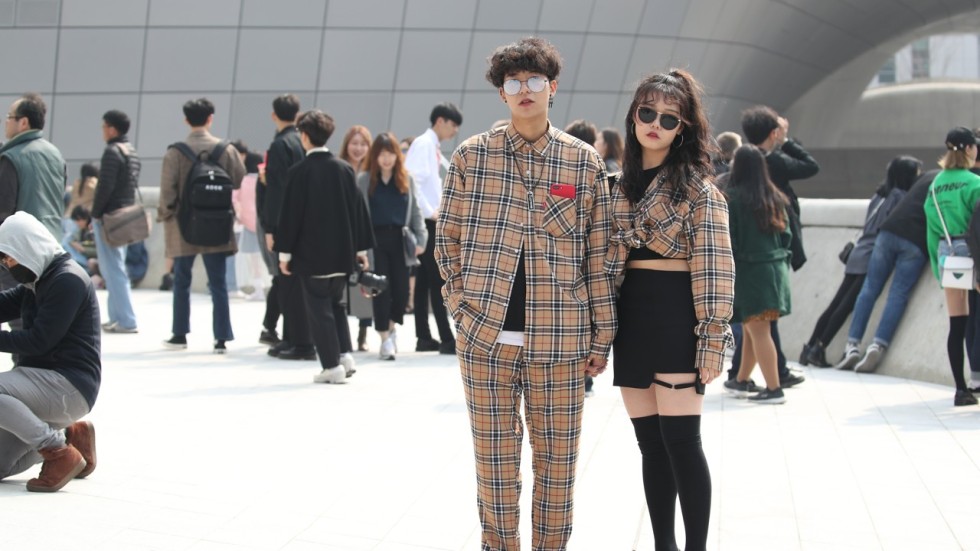
The opportunity for my business venture are individuals interested in fashion; especially K-fashion and cannot find an outlet where they can access and purchase trend related clothing items. Most of my opportunity are defined geographically outside of the country of South Korea and can range from teens to mid thirties. This opportunity is growing with the rise of Seoul Fashion Week, K-pop, K-dramas, and Korean celebrities that are gaining fame outside of the aforementioned country itself. This window of opportunity will be open for quite some time but I do think that it will be continuous because Korean fashion is constantly developing and will grow to be something larger than its title of “Korean” fashion. Currently, customers are satisfying this need by either buying their clothes directly in Korea, finding clothing items that can replicate the look from domestic brand companies, or paying high prices for Korean clothing brands that have a limited international outreach. And due to insufficient brands currently in the market, it is difficult for customers to stay loyal to one brand; especially due to high prices for non-brand labels.


My innovation is not life-changing, but it helps suffice a demand and need for clothing. My idea of creating an online Korean fashion mall for international shoppers stemmed from a personal struggle to buy clothes that fall under Korean fashion trends. It would help those interested in Korean fashion and those who are looking to buy clothes that fall under the trend by giving them an accessible platform to buy these clothes. MY Korean online fashion mall would be a platform that connects currently existing clothing brands in Korea to those residing outside of the country; in other words, the clothes would be given to my company in wholesale and my company then would sell them to the customers interested. While this may seem like a simple retail business, my company would be satisfying a need that has not been met even though Korean fashion has boomed; this is due to the lack of Korean businesses that reach out internationally and ship overseas as well. Many online Korean brands do not sell to overseas customers because of the lack of financial ability; due to the large amounts of businesses in the Korean market that are all trying to sell to a limited population. My idea would not only help those business expand to outside of the country but it would also help my target audience.


There are very limited competitors because many are domestic in Korea and have their main focus on the Korean market instead of the International market; making their international branch a lot weaker than my venture that will be based in America and targeted towards customers within America and other countries outside of Korea. Business location, shipping, and price points are the main roles in defining my business concept because those are the main reasons why and how my venture concept came to be in the first place.


My connection to the fashion market in Korea will make it difficult for other people to copy; also my ability to fluently speak, write and understand Korean and English will help me with communicating and being able to carry out business easily without a translator or help. I think the next venture for the current one is to expand into creating clothes under my own brand. Being a retail brand is the main goal, but I also think that having my company be a clothing brand in in of itself is a way to upgrade the brand. In five years with this venture, I still want to be working with it and not under someone else. I want to develop and grow this business in the next decade to where it can be a household name to people with interest in clothing and fashion. And even beyond that, I want my company to be known as the pioneer of Korean fashion clothing here in America and in other foreign countries.





30A – Final Reflection


2) What sticks out to you as the most formative experience? The experience that you'll remember years later? What was your most joyous experience? What experience are you most proud of yourself for accomplishing?
The most formative one was the elevator pitch assignments because they refreshed my presentation skills and getting peer feedback was really helpful in fixing my mistakes. My most favorite experience was the reading reflections because I love reading and I really enjoyed being introduced to a lot of new books. I am proud of accomplishing this course and being able to strengthen my idea of an online Korean shopping mall.
3) At the beginning of the semester, I mentioned that I wanted each of you to develop an entrepreneurial mindset. Now, at the end, do you see yourself as an entrepreneur? Do you think you have moved closer to developing an entrepreneurial mindset?
I do see myself more as an entrepreneur through the help of the lectures and assignments. I think that now that I know more, I am able to think differently than before. But I know I still have a lot more to learn and a lot more to think about before I can call myself someone with a full “entrepreneurship mindset.”
4) What is the one recommendation you would make to the students who are going to journey down this path in the future? What would you recommend they do to perform best in this course? What would you recommend they do to foster that mindset?

I would recommend investing more time into understanding the lectures and what the professor is teaching. I believe that in order to develop and foster the entrepreneur mindset, you need to be open to learning more about it; just like any other subject. I also recommend reading the books from the reading list regardless if they are part of an assignment or not.


Image result for entrepreneurship mindset

Monday, November 26, 2018

27A – Reading Reflection No. 3

Shoe Dog by Phil Knight
1) You read about an entrepreneur:
  • What surprised you the most?
It surprised me how Knight hit the floor running and started his business right after a
phone call.
  • What about the entrepreneur did you most admire?
I admired how smart his actions were despite how reckless they might seem. He had
an idea, and inspiration and just went for it because of his “what could I possibly lose”
mentality.
  • What about the entrepreneur did you least admire?
There wasn’t anything that I didn’t admire. The story Knight had to share was so
inspirational and a lot of the actions he took to start his business reminds me a lot of
how I am acting to start the fashion brand of my dreams.
  • Did the entrepreneur encounter adversity and failure? If so, what did they do about it?
Considering the fact that Knight was straight out of graduate school when he first
started his company, he encountered setbacks and problems with his Japanese
supplier and after they separated.
2) What competencies did you notice that the entrepreneur exhibited? Knight’s focus for
the brand was so different than other people that started businesses. He didn’t start
the business to make a lot of money or to become famous; he started it because he
had an idea and wanted to see how it would play out.
3) Identify at least one part of the reading that was confusing to you. I didn’t find anything
that was really confusing.
4) If you were able to ask two questions to the entrepreneur, what would you ask? Why? How
did you keep motivating yourself to continue the business despite setbacks? And
what would you think have happened if Nike didn’t grow to be what it is today? I
would ask these questions because they are questions I got curious about while
reading this book. Also, they’re also questions I can learn from as well.

5) For fun: what do you think the entrepreneur's opinion was of hard work? Do you share that
opinion? I think it did take a lot of hard work for the entrepreneur because it takes a lot
to follow through when starting a company. Like Knight stated, “the cowards never
started, the weak died along the way — that leaves us.”

26A – Celebrating Failure

1) Tell us about a time this past semester that you failed -- whether in this class, or outside of this class. Don't spare any details! It'd be even better if there was something you tried several times this semester, and failed each time.
During this semester, I failed at budgeting my money. I ate out a lot with my friends, bought what I wanted and didn’t keep track of the small payments that ended up pilling up. Now that I am on my own and that I have full control over my money, I didn’t realize how fast money could be used. I never fell into the negatives and I don’t have debt, but now I struggle with having enough money now; after I used money in the beginning of the semester.
2) Tell us what you learned from it.  
I learned how important it is to keep track of your money and not spend it on things that I do not necessarily need. I learned how to budget in a way that I can see where I spend my money and I try to save as much as I can. And I found a method that helps me be aware of how much I am spending; I found that spending cash instead of using my card helps me physically see how much money I have and how much I have left.
3) Reflect, in general, on what you think about failure. Failure is hard, isn't it? It's embarrassing, sure, but it also means that we have to change something about ourselves. Talk about how you handle failure (emotionally, behaviorally). Finally, talk about how this class has changed your perspective on failure -- are you more likely to take a risk now than you were just a few months ago?
I tend to reflect after I fail. I’m not afraid of failing, but I try to avoid failing and so I try to think about what I did wrong and how I can fix it. This class has helped me think more in depth of my business venture and now I don’t feel so worried or scared about failing. Of course I still have my doubts, but I feel more comfortable with failing.


28A – Your Exit Strategy

1) Identify the exit strategy you plan to make. Do you intend to sell your business in the next 5 years for a large return? Do you intend to stay with the business for several decades and retire? Do you intend to protect the venture as a family business, and pass it down to your children?
I intend on staying with the business for several decades until I cannot and retire. And as I retire, sell it off for a large return.
2) Why have you selected this particular exit strategy?
I selected this exit strategy because I love fashion and I want to continue staying in the field for as long as I can and continue designing clothes until I physically cannot or until I feel like I have found another younger individual to take over.
3) How do you think your exit strategy has influenced the other decisions you've made in your concept? For instance, has it influenced how you have identified an opportunity? Has it influenced your growth intentions or how you plan to acquire and use resources?
My exit strategy has affected how I plan on using my resources to continue to create clothes; by staying in the industry as long as I can, I can continue to not only create connections but also strengthen relationships over the time I run the business venture. My exit strategy allows me to be creative and allows me to explore methods of expression through clothing and styling.

Friday, November 16, 2018

24A – Venture Concept No. 1


The opportunity for my business venture are individuals interested in fashion; especially K-fashion and cannot find an outlet where they can access and purchase trend related clothing items. Most of my opportunity are defined geographically outside of the country of South Korea and can range from teens to mid thirties. This opportunity is growing with the rise of Seoul Fashion Week, K-pop, K-dramas, and Korean celebrities that are gaining fame outside of the aforementioned country itself. This window of opportunity will be open for quite some time but I do think that it will be continuous because Korean fashion is constantly developing and will grow to be something larger than its title of “Korean” fashion. Currently, customers are satisfying this need by either buying their clothes directly in Korea, finding clothing items that can replicate the look from domestic brand companies, or paying high prices for Korean clothing brands that have a limited international outreach. And due to insufficient brands currently in the market, it is difficult for customers to stay loyal to one brand; especially due to high prices for non-brand labels.


My innovation is not life-changing, but it helps suffice a demand and need for clothing. My idea of creating an online Korean fashion mall for international shoppers stemmed from a personal struggle to buy clothes that fall under Korean fashion trends. It would help those interested in Korean fashion and those who are looking to buy clothes that fall under the trend by giving them an accessible platform to buy these clothes. MY Korean online fashion mall would be a platform that connects currently existing clothing brands in Korea to those residing outside of the country; in other words, the clothes would be given to my company in wholesale and my company then would sell them to the customers interested. While this may seem like a simple retail business, my company would be satisfying a need that has not been met even though Korean fashion has boomed; this is due to the lack of Korean businesses that reach out internationally and ship overseas as well. Many online Korean brands do not sell to overseas customers because of the lack of financial ability; due to the large amounts of businesses in the Korean market that are all trying to sell to a limited population. My idea would not only help those business expand to outside of the country but it would also help my target audience.

23A – Your Venture’s Unfair Advantage


  1. I have manufacturers to produce my clothes
    1. This is valuable, but it can change and is substitutable with other manufacturers.
  2. I have the financial ability to start up my business
    1. This is rare because many startups don’t start will full financial capability and resort to loans.
  3. I have designs in progress for the launch
    1. This is valuable but it can change and is substitutable with other designs and reforms.
  4. I have the capability to design the website
    1. This is valuable; can be substituted with a professional, but it helps financially to have the skill.
  5. I have models to model the clothes I will make
    1. This is valuable; can be substituted with a professional, but it helps financially to have the skill.
  6. I have photography knowledge from past experiences
    1. This is valuable; can be substituted with a professional, but it helps financially to have the skill.
  7. I have my parent’s full support in starting
    1. This is rare and valuable because I know many people who have parents that do not approve of their dreams and goals; so to have the full support my parents give, it is important
  8. I have contact with people in the fashion industry that I have close bonds to
    1. This is rare and valuable that cannot be replaced but it can increase
  9. I have contact with businesses that source the products necessary to make my clothes
    1. This is rare and valuable that cannot be replaced but it can increase
  10. I am in the middle of learning business along with learning about design
    1. This is valuable because I understand how important it is to know business and design if I plan on running a proprietorship.


My top resource is my contact with people in the industry with close bonds to because they can help me network and get my brand going and connect me to other people in the industry as well.

25A – What’s Next?

Existing Market.
The next step is to offer more convenient shopping for those interested in Korean fashion.
After interviewing three people, they told me that American shipping companies should be reaching out to these Korean online shopping malls to provide international shipping; or to have an American branch for these shops. If finances are complicated, have these Korean shops provide wholesale to American shops.
In order to create a business to help the niche that is looking for Korean clothing, I think it is important to make use of the already existing market. Whether it be through establishing an extended branch of these online shops to American servers or have these online shops be open to wholesale products, it is important to be able to get these products to the customers in an accessible and easy way possible.
New Market.
My radically different market would be a B2B market. In this case, our business would not set up an online shopping mall ourselves, but be the link between Korean online shopping malls and other offline/online shopping malls in America so that they can sell Korean clothes to foreign customers.

For this new market, the interviewees suggested that in this market, our business can act like consultants to these American malls; referring them to the Korean online shopping malls that fit the American brands’ overall style (ie: cute or stylish or street-heavy or formal or casual, etc etc). That way, consumers can get the benefits of Korean fashion without having to categorize it seperate as “Korean fashion.”

What surprised me the most was about how possible this B2B idea could be. I only thought of it as a B2C market, but after considering how the business would run if it were a B2B company, I was able to see the wider spectrum of opportunities and possibilities that the business could have.

Friday, November 9, 2018

22A – Elevator Pitch No. 3

I realized that other students in my class felt the same way with this pitch: it was nerve wracking at first, but as we all did it a second, now third time, we get the hang of it and are able to improve from our first time. I also realized that from the second to now this third time, I am able to memorize my pitch a bit better and be able to project myself a bit better too. Like always, I didn’t get any wrong or silly feedback but rather really supportive ones instead which I found to be encouraging.

link:

https://youtu.be/tQfF905PU

Thursday, November 8, 2018

21A – Reading Reflection No. 2

HOW TO FAIL AT ALMOST EVERYTHING AND STILL WIN BIG
BY SCOTT ADAMS

1) What was the general theme or argument of the book?
While the title of the book is literally the summary of the book, the author, Scott Adams writes about his failures and how he ultimately found success through his losses and elaborates on the objectives he learned.

2) How did the book, in your opinion, connect with and enhance what you are learning in ENT 3003?
The class helped me change my goals into systems by allowing me to work towards a business I want to build instead of having me just waiting on future opportunities. And instead of just wishing that one day I will build a company, the class helped me decide through the different assignments and brain twisting questions I faced.

3) If you had to design an exercise for this class, based on the book you read, what would that exercise involve?
The exercise would be based on Adams’ idea of systems vs goals. I would have every think about and decide on a system they would follow up on and have them make a system of their own. I learned through the book how important systems are in comparison to goals. While goals are time restricting, made measly about the future, and specific, systems help make everyday a win by making what is important to you clear and not time restricting. And by being able to follow systems everyday, it helps one to be focused and feel good about everything they choose to do that is part of their day to day system.

4) What was your biggest surprise or 'aha' moment when reading the book? In other words, what did you learn that differed most from your expectations?

I found it interesting when Adams emphasized being selfish. I always grew up learning to put others before myself, but Adams emphasized working on yourself before helping others. I realized that it is important to develop yourself first because what help can you possibly be if you can’t help yourself? I learned that in order to produce fruit for others, the tree needs to be fully developed, ready, and mature enough to be able to bear fruit.

Friday, November 2, 2018

20A – Growing Your Social Capital

Expert on this market: Joanne from JKim NY Corp
She is the product and project manager and also a client and vendor relation manager. She is also an analyst so she is qualified as an expert in the market. I contacted her when I initially asked for quotes on producing the designs I created. I found the person on a manufacturer listing. She can help me analyze trends for upcoming seasons and pitch in ideas for designs and assist in method of action I should take.

Domain expert in this industry: Ilona Saakova from SCOTT x SCOTT, Inc.
She is a design assistant which fits with her domain expertise in fashion. I also found her company on a listing and I also heard of the company for they create clothes for some of my favorite brands so I wanted to work with them. This person will help me design all aspects for my collection; not only the clothes but also packaging, labeling, branding, website and so on.

Important supplier to this industry: Jenniffer from NYC factory inc
She works for NYC factory Inc, a company that supplies for some of the biggest fashion brands out in the market. I contacted her to discuss my upcoming collection and with regards to pricing and product development. They gave me a chance to produce my clothes with exchange for a positive outcome in my collection. I'll have connection to supplies for creating clothes; various materials and access to technology.


This experience helped me realize the importance of networking and the importance of having a network of people I can work with to produce my brand. This experience was a bit different because it required me to think more in depth of every single network connection in detail. But other than that, there was no big difference.

19A – Idea Napkin No. 2

  1. I am a college student with the aspiration of sharing and idea and my thoughts throughout clothes and fashion. I am creative and bold; not scared to be bold in talking about taboo topics and shushed conversations. This business that I want to create will become my creative outlet and also a brand people want to wear not only because it looks good, but because it holds meaning to them and because they want to make the same statement through fashion. I want to inspire and encourage others through my work.
  2. I am offering an idea. An idea expressed through the clothes. Through the way the clothes are shaped, designed, colored, and produced, the clothes will reflect the theme at hand and will cater to the unmet needs of the customers who never liked a brand that fit them truly till now.
  3. All my customers are interested in fashion and like experimenting with clothes. They don't want fast fashion but want items that make them feel exclusive. They also want clothes that aren't too flashy and can easily be matched with other clothes.
  4. They care because they believe in the same motto as me: to be bold and to be expressive. Beyond the clothes and the money and everything physical that is involved, I want to build a culture through my brand.
  5. The main thing that sets me apart is the reason for wanting to start my brand. I don't want to do it for the money but for the culture I want to build through it. And my background with being Korean American and the things I went through growing up is something I have that nobody in the fashion business has.

These elements do fit together with my business because it is related to the core of my business. They aren't weaker or out of joint and I would believe that these elements are relevant to every business and business owner looking to start a business. It helped me reflect on who I am in terms of my business. It reminded me on why I wanted to make my brand in the first place.

Friday, October 26, 2018

17A – Elevator Pitch No. 2

I was surprised at how dynamic I could have been but was unable to be. I thought that the feedback I received were all helpful and none were outright wrong or silly.

I tried to be more dynamic in my presentation without being “too much.” I tried finding the right balance between making sure that the information got to the audience without being too boring.

https://youtu.be/tQfF9ne05PU

18A – Create a Customer Avatar

My customer is in their mid teens to their mid thirties with great interest in fashion.
They may be interested in Korean culture (K-pop, K-dramas, etc) and therefore are
becoming interested in Korean fashion. They like experimenting with clothes and are
interested in Korean streetwear, casual wear, and cute clothes.
Growing up Korean American, I was always interested in learning about not only my
American culture, but also about my Korean culture. And in doing so, I became interested
in the sense of fashion Korean people portrayed. I wanted to be able to provide that sense
of style to people overseas that cannot access the clothes that are sold in Korea exclusively.

Friday, October 19, 2018

16A –What’s Your Secret Sauce?

1) Describe five ways in which you think you have human capital that is truly unique. What is it about you, exactly, that makes you different? Write this up in a detailed list.
  • My upbringing in America with Korean immigrant parents
  • Growing up in an area where I was constantly around various different cultures and people of various racial backgrounds
  • Having the freedom since a child to explore anything I had interest in; allowing me to grow artistically and think differently
  • My approach to new things; allowing me to embrace and come forth with an open mind to whatever I am about to face
  • Being adventurous; which helps me learn things without being scared and wanting to grow in what I am passionate about
2) Interview the five people who know you the best. Ask them what they think makes you different -- remember, focus on your knowledge, skills, abilities, emotions -- in other words, your human capital. Try to stay away from discussing your other types of capital (such as who you know). Record each interview. In your post, please post each interview, as well as a two-three sentence summary of each interview, explaining what your key takeaways are. There is no time limit on these recordings. As long as you cover the information asked for above, that's all you need to do.
Soundcloud interview link: https://soundcloud.com/search?q=challet%20jeong
Interview 1: She is my best friend and the one I’ve grown up with. She really knows me as much as I know her.
2 & 3: Regardless of the fact that both are my roommates and I’ve only known them for this semester, I’ve spent so much time with them; to the point where people think we are long term friends from home.
4: He is my brother and my one and only, favorite sibling. We are so different but we have also so many in common.
5: She was the only person I could call my best friend from high school that I could rely on for anything. If I needed someone, she was always there and is still there for me.
3) Reflect on the differences. How do you see yourself, and how do others see you? Are there differences in how you assess yourself compared to others? What do you think causes these differences? Do you think your interviewees are correct about you? Finally, going back to your list from part 1, would you make any corrections to the list? How?

I don’t think there are many differences in how I view myself and how others view me; I think this is because I don’t try to hide who I am with people and I am really open to being myself around anyone and everyone. Therefore, I think my interviewees are correct about me. I do not have any corrections to make on the list from question 1.

15A – Figuring Out Buyer Behavior No. 2

>Begin with alternative evaluation. In the last case exercise, you determined how customers sought information related to solving their need. The outcome of this step is to produce a set of alternatives. Customers pick from among this set of alternatives. In this step, your job is to figure out how they do their picking. Does price matter the most? Does quality? Does style? Is there more than one factor that is important to your customer segment?
From the interviews, more than price, quality and style matter the most to the customers. If they really like the clothing design and the quality of the clothing item is not cheap but is of higher grade, customers are willing to pay regardless of if there is a price increase. Also customers like when the style of clothing they want is exclusive in the sense of having a limited quantity or having the feeling of something that is their own. An additional factor is of the company’s background; what the company stands for and what the company’s morals are as well. Customers enjoy the sense of culture that the brand can create and provide.
>How/where do they buy? Elements of the actual transaction can help characterize your segment. Is your segment more likely to buy online or in a store? Are they more likely to use cash or will they finance the purchase? Etc. If this is a B2B purchase, who's involved in the purchase decision?
My segment is more likely to buy online because of the accessibility of not having to physically go to the actual store and because of the fact that they can buy clothes from the comforts of where ever they are. Two of the people I interviewed are so busy juggling work and school that they don’t have time to spare on leisure shopping at the mall. They are more likely to finance the purchase online because it is easy to save your card information and pay online; there is no long wait or line before making a purchase and the interviewees all did not carry cash at all or did carry but in small amounts for emergencies.
>Post-purchase evaluation. What matters most to your customers when they think back on the 'rightness' of the purchase? What helps them determine the purchase was a good idea? What sorts of things make them think a purchase was a bad idea?
If the clothing item arrives to their door and it makes them excited and when they put it on, it makes them feel good, then it helps determine that the purchase was a good idea. However, if the product arrives in poor condition or has many defects, then it can occur to the customer that the purchase was a bad idea.
>Draw conclusions. Based on what you know about this segment and what you learned in your interviews, how would you succinctly describe this segment in terms of alternative evaluation, purchase decision, and post-purchase evaluation?

A lot of factors go into customers’ evaluations of the products that the company is selling. Even though I am trying to sell clothes, for example, the design of the website can deter a customer. Or the lack of free shipping can stop a customer from buying what they have in their cart. This shows that companies cannot simply just focus on their product but have to focus on the entire experience that the customer goes through; from the initial entering of the website to receiving the item and trying it on.

Friday, October 12, 2018

14A – Halfway Reflection

1) Tenaciousness is a competency. What are the behaviors that you have used (or developed) to keep up with the requirements of this course?  
I tried doing my assignments ahead of time and set a specific date to do the work for this class.
2) Tenaciousness is also about attitude. Talk about a moment or two when you felt like "giving up." What pulled you through? Do you feel like you've developed a tenacious attitude during the past two months? What experience or experiences most contributed to this?
I felt like stopping when I felt overwhelmed with all of the work I had due along with my other classes and felt so drained from doing everything. I felt like despite falling a couple of times, I was able to bring myself up again and motivate myself to pull through this class.
3) Three tips. What are three tips you would offer next semester's student about (1) fostering the skills that support tenacity and (2) developing the 'tenacious mindset' ?

  1. If you don’t know what study and working habits work for you, try a new tactic every week until you find the one that works for you
  2. Talk to other people in the class or other people that are interested in listening to your idea and can discuss with you your plans
  3. Ask questions if you need help; whether that be a mentor, a teacher, or a peer

Image result for inspiring pictures